





AI-Based Algal Bloom Prediction Studied in Boğaziçi University DSAI Master's Thesis
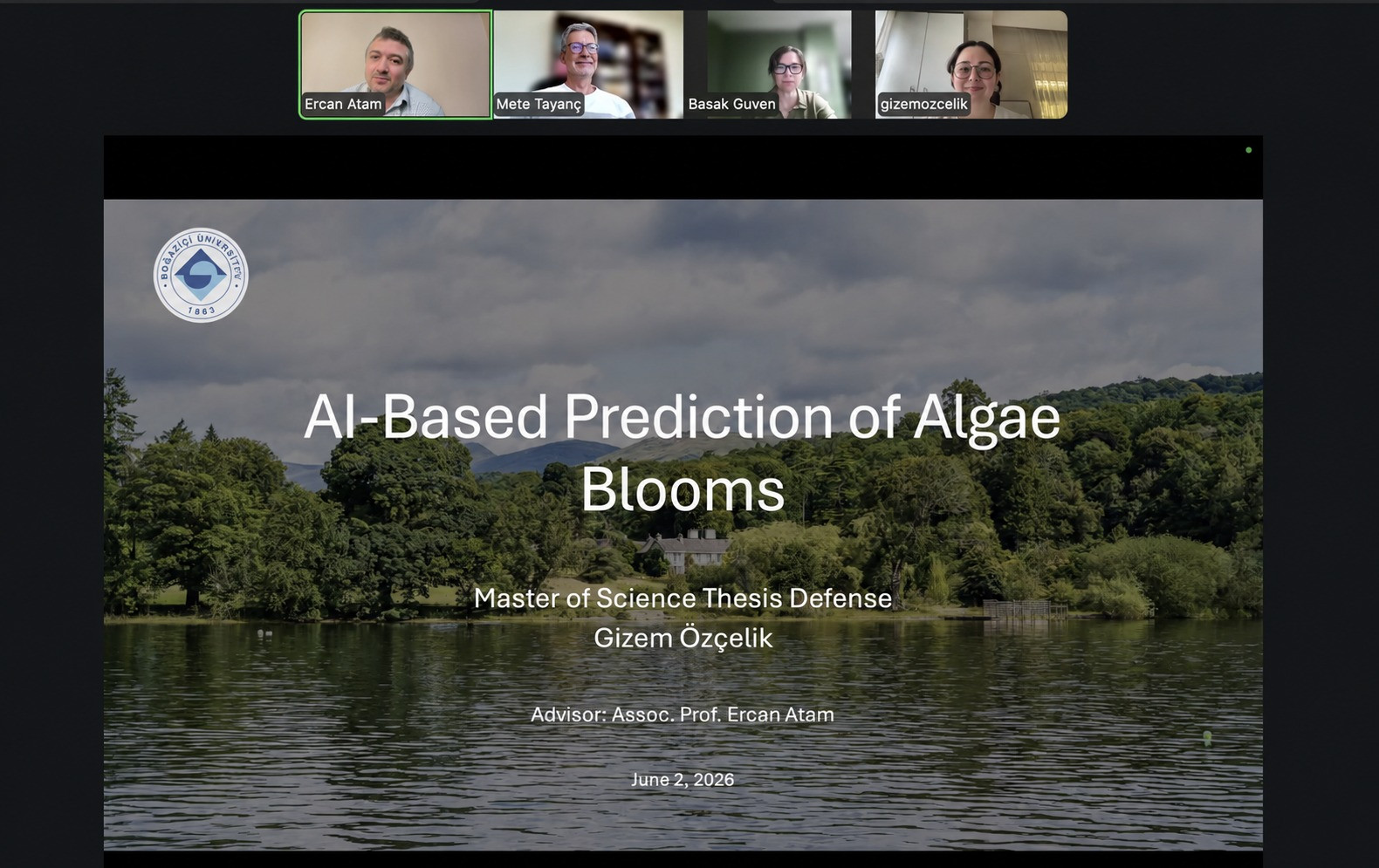
Algal blooms are an important environmental concern because of their potential impacts on aquatic ecosystems, water quality, and human health. In her master’s thesis, Gizem Özçelik, a graduate student at Boğaziçi University’s Data Science and Artificial Intelligence (DSAI) Institute, studied AI-based methods for predicting “chlorophyll-a”-based algal bloom occurrence. The thesis was supervised by Ercan Atam.
The thesis, titled “AI-Based Prediction of Algae Blooms,” develops a comparative machine learning and deep learning framework for Lake Windermere. The study evaluates six classification models—LightGBM, Logistic Regression, LSTM, Random Forest, SVM, and XGBoost—under short-term and long-term prediction set-ups using water quality, seasonality, region, and climate variables.
The results show that XGBoost achieved the best performance in the short-term set-up, while Random Forest performed best in the long-term set-up. Using the best long-term model, the thesis also generated future algal bloom projections under RCP4.5 and RCP8.5 climate scenarios. The findings highlight the value of water quality variables for bloom prediction and provide practical insights to support future water management and environmental decision-making.
